
📬 Newsletter 152
When the piano is broken, you play louder.
I just watched Köln 75.
The film tells the story of how Keith Jarrett’s legendary January 1975 concert in Cologne — one of the most celebrated in jazz history — nearly didn’t happen, and how it was saved by the determination of an eighteen-year-old concert promoter named Vera Brandes. If you know the record, you know the outline of the story. But seeing it dramatized is different. What struck me wasn’t the romance of it — it was the specific terror of what Jarrett was doing on that tour.
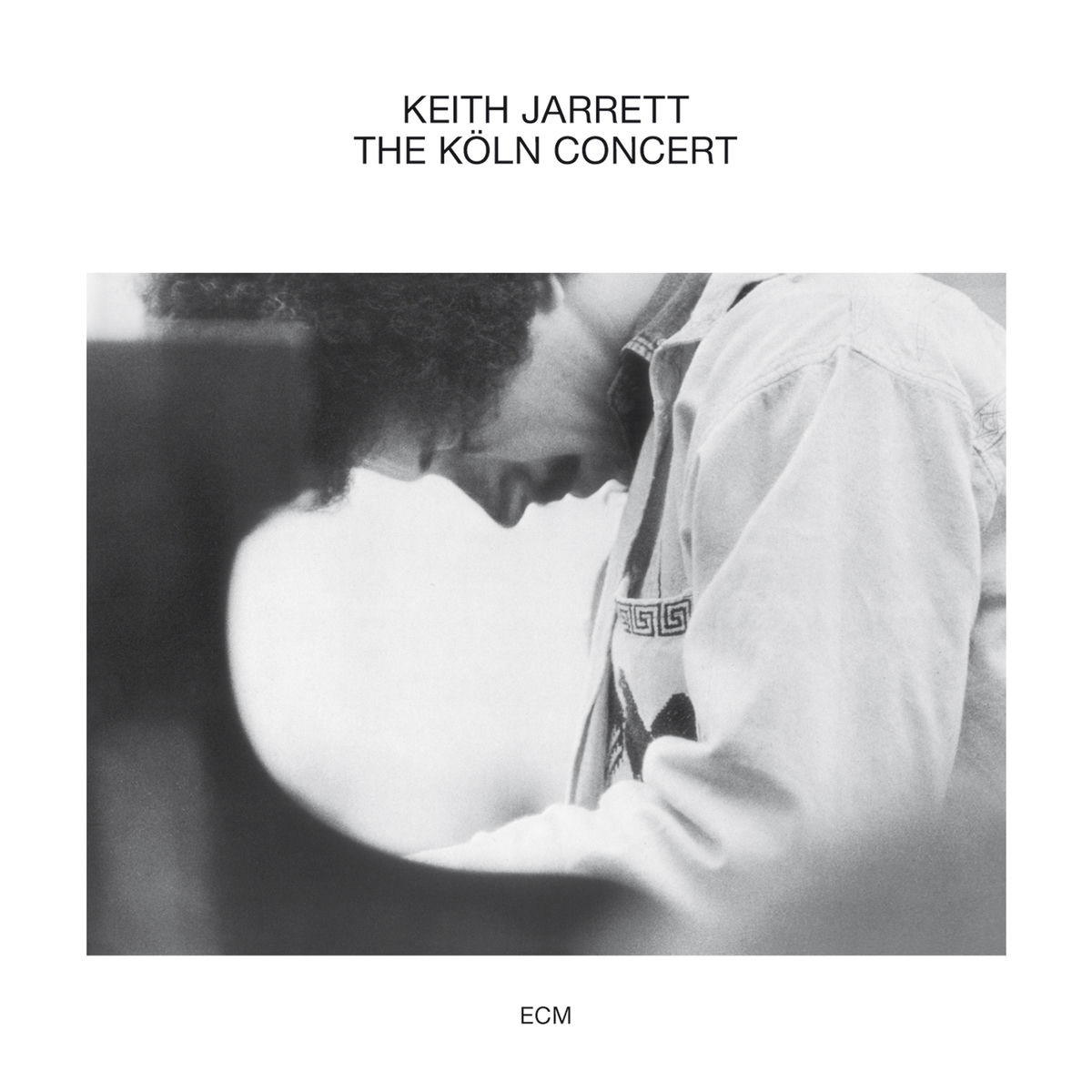
He was improvising every concert on the tour. Every single night, no set list, no rehearsed material — sitting down at a piano in front of a paying audience and inventing something from scratch. And not only that: arriving in Cologne, he discovered the piano he had requested was not there. Instead, waiting backstage was a small rehearsal Bösendorfer never intended for concert use — worn, underpowered, mechanically compromised, with a muddy bass register, thin upper octaves, and several notes out of tune. He overcame the lack of volume by standing up and playing the piano very hard — standing, sitting, moaning, writhing, pounding the keys. You can hear him on the recording, the agony of the music, the effort at creating any sound at all.
The result is the best-selling solo piano album in history. A masterpiece made from constraint, exhaustion, and a broken instrument.
But what also stayed with me is the film’s other story — the one about Vera. The speaker who cancels. The piano that’s wrong. The venue that doesn’t cooperate. The endless chain of things that shouldn’t be happening twelve hours before curtain. Watching her navigate all of it, I kept thinking: yes. That’s exactly what organizing an event feels like. Every single time.
I’ve been doing design events for years — first at Domestika with MadinSpain, now with Paradís Valencia and Upscale Conf. And the truth is that no matter how carefully you prepare, something always goes wrong. The question is never whether it will — it’s whether you can absorb it without the audience ever knowing.
I have one story I keep coming back to. A speaker arrived at a MadinSpain event with a brand new laptop — so new that its ports weren’t recognized by any of the venue’s technical equipment. Nothing worked. The technical team couldn’t solve it. The clock was running. And at some point, standing backstage with about five minutes to go, I made the call: we weren’t doing the talk. We were doing an interview. I grabbed a list of questions I half-invented on the spot, walked out on stage, and conducted a live conversation in English with someone who had prepared a completely different format. It still hurts a little to think about what he’d prepared. But the audience never saw the seam. They saw a conversation that felt relaxed and spontaneous — because from where they were sitting, it was.
I think about that moment a lot when something goes sideways at Paradís. The event is never what you planned. The good ones are what you improvised.
Rather than fighting the piano’s deficiencies, Jarrett adapted to them. That sentence is a design brief. The constraint isn’t the problem. Most of the time, it’s the work.
Here’s what else has been in my tabs.
A fan-made 3D walk-in closet containing every Criterion Collection edition, shelved in spine-number order — exactly as a true collector keeps them — with a filterable list view and shared filters between both modes. You navigate it with your mouse like a first-person video game, aimed at the spines. Click a film and you get the cover, the details, the context. It’s completely unnecessary and entirely wonderful. The kind of project someone builds because they had to, not because anyone asked them to.
✍️ The Wall — George Kedenburg III
George Kedenburg III writes about vibe coding, taste, and the part of creative work that doesn’t get easier — including the specific phenomenon of hitting a wall on a piece of writing, leaving it on the shelf, and coming back to find that a new AI model has since arrived that can get you over the hump at the quality level you need. It’s an honest, uncomfortable piece about what it means to use AI as a creative collaborator rather than a shortcut, and what that does to your relationship with your own standards. Worth reading slowly.
A complete archive of the official Roland-Garros tournament posters from 1980 to 2026, curated by Juan Buis — decades of artistic expression from the renowned artists commissioned for the French Open. The range is remarkable: from painterly figurative work in the early years to increasingly bold graphic statements in recent editions. A good reminder that sports can commission genuinely serious art — and that some of the most interesting poster design of the last forty years has lived outside the design world’s usual frames of reference.
DailyObjects is an Indian brand built around the idea that everyday objects — phone cases, bags, wallets, sleeves — deserve the same design attention as anything else. Every product is crafted with over 1,000 Indian artisans and makers, sourcing global-quality materials but building locally. Their design philosophy is rooted in minimalism, with strong focus on quality materials and thoughtful details. I’ve been following them for a while and the US site is now live. The kind of brand that makes you rethink what “everyday” means as a category.
📺 Grainrad
A free browser tool powered by WebGPU that applies ASCII, dithering, and retro visual effects to any image or video input, running at 60fps in real time. The results look like something between a demoscene artifact and a contemporary art installation. Drag in an image, adjust the parameters, watch it transform. I’ve spent more time with this than I’m going to admit. Purely for play — and sometimes that’s exactly what you need.
🧠 In the Age of AI, Your Expertise Matters More Than Ever — Inc.
A piece I found myself nodding along to more than I expected. The argument, drawn from a conversation with LinkedIn’s chief economic opportunity officer, is that AI is not replacing expertise — it’s amplifying it. People hire outside experts for the years of experience and knowledge accumulated in a given field, and that doesn’t change when AI can execute faster. What changes is the ceiling: what one person with deep knowledge and the right tools can now actually produce. I’ve been living this personally in the last year. The AI tools I use daily don’t replace my judgment — they free up more time for it. Worth reading if you’ve been wrestling with where you stand on the AI spectrum.
🎧 Asa Moto — The Ransom Note Mix
Asa Moto is the electronic music duo of Oliver Geerts and Gilles Noë, a pairing forged in Ghent, Belgium in 2012 that has since become one of the most inventive forces on the continent’s club circuit. They’re signed to DEEWEE, the label run by the Dewaele brothers of Soulwax — about as good a cosign as you can get in Belgian electronic music. This mix for The Ransom Note is a statement: 82 tracks in one hour. Not 82 intros — 82 fully realized ideas, cut and layered with the kind of precision that makes an hour feel both very long and somehow not long enough. The tracklist alone is worth looking up. Put it on and don’t make plans.
That’s it for this one. More soon. Enjoy the holidays.
— Wences